

Hell on Earth
I watched the Elvis movie on the flight home from Las Vegas.

Probably wasn’t the smartest thing to watch after two straight weeks inside the Venetian. But somewhere over the desert, exhausted and half-delirious from caffeine, dock dust, and four hours of sleep a night… it hit me.
Vegas doesn’t just host people.
It keeps people.
That city knows exactly what it’s doing.
The lights stay on forever. The carpets never end. There’s no clocks. No windows. No weather. You walk twenty miles a day and somehow never actually leave the building. You can unload forty trucks before sunrise, solve fifteen disasters before breakfast, and still feel like it’s 2AM for an entire week straight.
And the crazy part?
You start to like it.
That’s the dangerous thing about operations in Las Vegas. Especially at that level. Especially when you’re producing one of the biggest tech events in the country.
For a couple weeks, you feel extremely important.
Because you are.
The city may look like DJs, executives, giant LED walls, celebrity speakers, million-dollar booths, and happy-hour networking events…
…but underneath all that is labor.
Freight.
Forklifts.
Schedules.
Stress.
Men and women solving problems in hallways nobody photographs.
That’s the real show.
Nobody claps when the dock schedule works. Nobody posts the overnight carpet reset team. Nobody takes selfies with the guy figuring out why thirty crates are missing at 3:47AM.
But if those people fail?
The whole illusion collapses.
That’s what people outside this business don’t understand. We’re basically professional illusionists for corporate America. We make temporary cities appear out of concrete boxes.
And then we disappear before the applause.
That’s probably why Vegas messes with your head.
Because for a brief moment, the machine convinces you that you matter more than you do. The radio never stops. Your phone never stops. Executives need answers. Clients need miracles. Labor needs direction. Everybody suddenly knows your name because the building has to open in 48 hours.
Then the doors open.
And just like that…
you become invisible again.
That’s not bitterness.
That’s the job.
I think that’s why the Elvis comparison bothered me so much on the flight home. Watching a guy become trapped inside the very machine he helped build felt a little too familiar.
The Venetian started feeling less like a venue and more like a floating city you couldn’t escape from. A beautiful prison made of terrazzo floors and escalators.
You wake up.
Walk the same casino path.
Drink the same burnt coffee.
Solve the same emergencies.
Hear slot machines at 6AM.
Watch exhausted crews dragging gang boxes through marble hallways while billion-dollar companies rehearse keynote speeches about “the future.”

And somewhere in there you realize:
The people building the future rarely get invited into it.
That’s the strange emotional conflict of this industry.
You can be wildly successful and still feel strangely empty afterward.
You can oversee acres of production, hundreds of workers, multimillion-dollar environments… and still get home wondering why you don’t feel what you thought success would feel like.
Because eventually you learn this business survives off adrenaline. Not fulfillment.
And when the adrenaline leaves, silence shows up.
That silence on the flight home is brutal.
No radios.
No production meetings.
No dock calls.
No forklifts backing up.
Just you.

And honestly? That’s usually when the truth finally catches up.
For me, the truth is this:
I hate Las Vegas.
I love proving I can survive it.
I love the game.
The pressure.
The impossible timelines.
The organized chaos.
The feeling of walking an empty expo hall at 4AM knowing thousands of people will walk into a finished world a few hours later with no idea what it took to build it.
That part still feels sacred to me.


There’s a strange thing that happens in modern work.

The people who say things get celebrated.
The people who do things get pressure.
Not applause.
Pressure.
At the top of the hourglass is the world of buzzwords.
Strategy.
Innovation.
Alignment.
Transformation.
AI.
Culture.
Vision.
It sounds great. It photographs well. It makes for good LinkedIn posts and keynote slides.
But gravity eventually takes over.
And gravity always lands on operations.
Because at the bottom of the hourglass is the part of the world that doesn’t care about words.
It cares about:
Trucks arriving on time Forklifts moving safely Crews showing up at 2am Power being on Carpet being straight Doors opening when the public walks in
That’s where the sand falls.
Every idea.
Every promise.
Every timeline someone confidently committed to in a meeting.
Eventually it lands on the people whose job is to make it real.
And here’s the pressure nobody talks about.
The people above the hourglass are allowed to be wrong.
The people below it are not.
If strategy changes, that’s evolution.
If operations fails, that’s catastrophe.
No one writes case studies about the thousand things that had to go right for the show to open on time.
But everyone notices the one thing that didn’t.
So the operators live in a different world.
A world where:
You carry the weight of decisions you didn’t make.
You inherit timelines that were dreamed up in conference rooms.
You solve problems that didn’t exist until reality showed up.
And you do it quietly.

Because the real job isn’t saying.
The real job is doing.
The trucks don’t move because someone used the word synergy.
The lights don’t turn on because someone said innovation.
The show doesn’t open because someone had a great meeting.
It opens because somewhere, usually out of sight, a group of people decided:
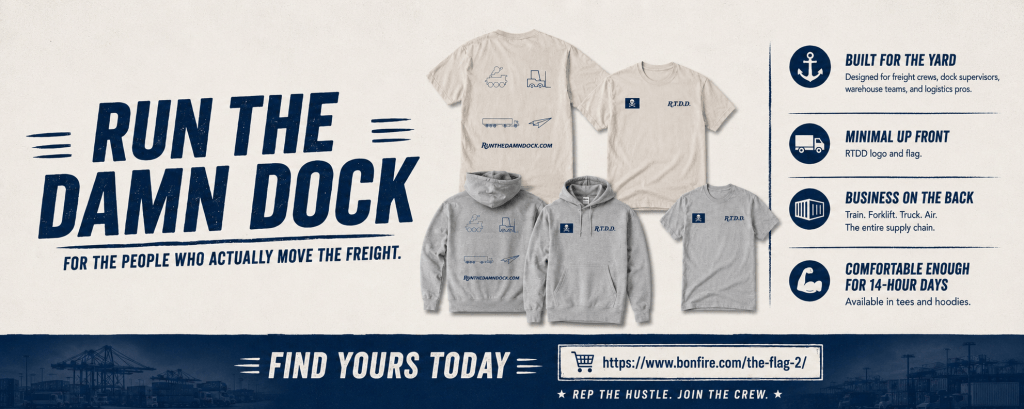
“Alright. Enough talking. Let’s run the damn dock.”
And if you’ve ever lived in that world, you know something most people never will.
The people at the bottom of the hourglass aren’t the loudest.
But they’re the ones holding the entire thing up.